

 7 min
7 min Before anyone calls you, messages you, books an appointment, or walks through your door, they have probably already looked you up online.
They have checked your reviews. Scrolled through your photos. Looked at your website. Compared you with someone else. And in just a few seconds, they have decided whether your business feels trustworthy, relevant, and worth their time.
That is why digital marketing for small business matters so much.
Because the decision that can make or break your week often happens before you ever speak to the customer.
So if your digital presence is patchy, outdated, confusing, or missing altogether, you may be losing clients to businesses that are easier to find and to trust.
What digital marketing does for your small business
It’s not a mystery. It’s not a specialism reserved for people with marketing degrees or agencies with six-figure retainers. Digital marketing for small business is everything you do online to get found, build trust, and turn strangers into paying clients. And for a local service business, it’s doing most of the heavy lifting before you’ve said a word.

Here’s what that looks like in practice.
Digital marketing makes you look like someone worth trusting
People don’t just find you online — they assess you. Reviews, photos, service descriptions, opening hours, response times, branding. All of it adds up to a gut feeling of I’ll keep scrolling or:
Yes, this place looks legit!
BrightLocal’s 2026 research found that 97% of consumers read reviews for local businesses — almost everyone. And how you respond matters too. Customers are more likely to trust a business that replies to reviews, because it shows the business is active, attentive, and willing to engage.
Digital marketing puts you in front of people who are ready to book
Local search is one of the clearest signs that someone is close to taking action. When someone types “physiotherapist near me” or “beauty salon in Bristol,” they are usually not casually browsing. They are looking for a business they can trust, contact, or book.

Example of Google search results for a physiotherapist. Simplified illustrative mockup. Not real search results, ads, rankings, or businesses.
That search can turn into real-world action quickly. Google research found that 76% of people who search on their smartphone for something nearby visit a business within a day. If you’re not showing up for those searches, someone else is picking up that client. Every time.
Digital marketing keeps you visible between visits
A physio appointment. A coaching session. A hair colour. These things don’t happen daily. The gap between visits is where clients quietly forget about you — or get poached by someone who showed up in their feed at the right moment.
Consistent digital marketing fills those gaps. A useful post. A seasonal reminder. An email that lands when they’re thinking about rebooking. Small touches that keep you front of mind when it counts.
Digital marketing lets you move fast
New service? Price change? Last-minute availability? Your website and profiles can be updated in minutes. A printed flyer cannot compete with that. Don’t underestimate how much flexibility matters.

Digital marketing gives you something to measure
You don’t need to become a data analyst. But knowing whether people are finding your site, clicking your booking link, or calling from your Google listing — that’s useful. Track the basics. Check in regularly. Adjust what isn’t working.
So what actually counts as digital marketing for small business?
Five things, broadly:
- Your website — your online shopfront. It should quickly tell people who you are, what you offer, where to find you, and how to book.
- SEO — search engine optimisation. The stuff that helps you appear when someone Googles what you do.
- Social media — Instagram, LinkedIn, TikTok, Facebook. Where you show your work, build an audience, and let your personality do some selling.
- Email marketing — newsletters, updates, offers. Usually the best tool for keeping existing clients coming back.
- Paid ads — Google or Meta ads that put you in front of a specific audience, fast.
You don’t need all five. Pick what fits your business and your capacity, and do it consistently.
If you want to see how these pieces fit together into something coherent, our small business marketing strategies and marketing plan articles walk through the full picture.
What this looks like by business type
Different businesses need different entry points.
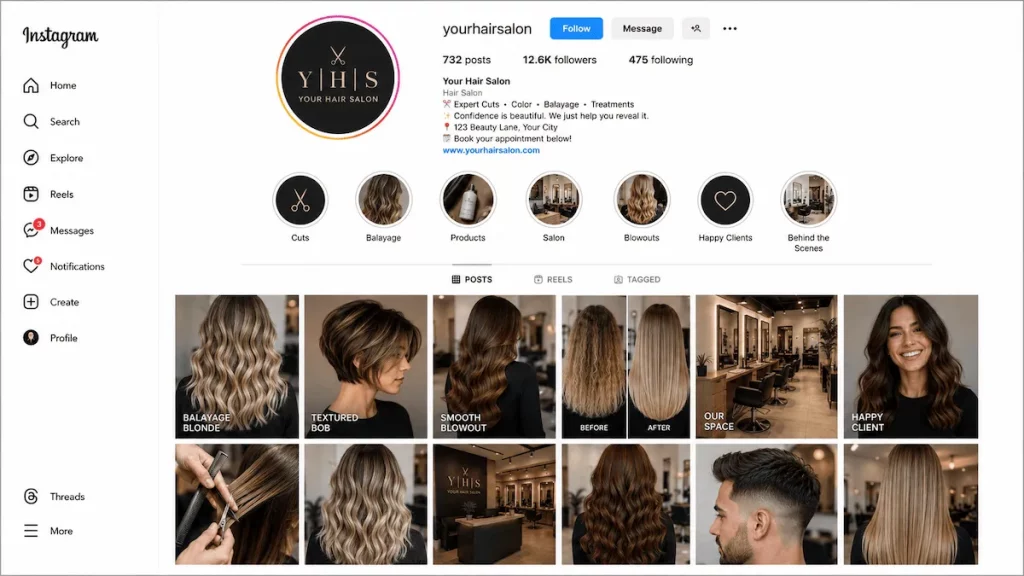
Beauty salons and therapists — clients buy results. Instagram photos of your work, Google reviews, a clear website with treatments and pricing. Visual proof matters more than anything else.
Physiotherapists — patients need confidence before they commit. Local search visibility, clearly explained treatments, and reviews that speak to real outcomes. Useful, jargon-free content builds that trust over time.
Coaches and consultants — decisions take longer here. Consistent content, a website that positions you properly, and a LinkedIn presence that demonstrates expertise. You’re not a transaction; you’re a relationship.
Tradespeople — most new work comes from Google searches and word-of-mouth. A simple, functional website, solid reviews, and an easy way to make contact will outperform almost anything else.
3 things to do this week
Theory is fine. Action is better.
1. Set up (or update) your Google Business Profile
This is usually the first thing a potential client sees — and it’s free. It appears in Google Maps and local search results, and for local businesses, it drives more enquiries than most people expect.

Example of Google search results for a physiotherapist. Simplified illustrative mockup. Not real search results, ads, rankings, or businesses.
Check that your phone number, address, and hours are correct. Add good photos. Choose the right business category. Ask happy clients to leave a review, and reply to the ones you already have.
When someone’s ready to act — not browse — a complete, polished Google Business Profile is often what tips them towards you.
2. Build a website that answers the basics
It doesn’t need to be fancy. It needs to be clear.
- Who are you?
- What do you offer?
- Where are you based?
- How do clients book?
Answer those four things well, make sure the site works on mobile, and you’re ahead of a lot of the competition. Over half of mobile users won’t recommend a business if their site is clunky to use on a phone. Worth bearing in mind.
3. Pick one social platform and post consistently
Instagram, TikTok, LinkedIn, Facebook — you don’t need all of them. Just the one where your clients actually spend time.
- Instagram: ideal for visual services — salons, beauty therapists, coaches.
- LinkedIn: B2B work, consultants, professional services.
- Facebook: local audiences, slightly older demographics.
- TikTok: personality-led content, younger audiences, surprisingly good for service businesses willing to get on camera.
Aim for 2-3 posts a week. Behind-the-scenes content, tips, before-and-afters, client stories. Keep it real.
Start with digital marketing today
Your clients are already searching. The question is whether they find you, or whoever got their Google Business Profile sorted last Tuesday.
Start with one thing. Do it this week. The businesses that show up consistently — not perfectly, just consistently — are the ones that compound over time.
Want to spot where your marketing has gaps? Grab our free workbook. It’ll show you what’s working, what’s not, and where to focus next.
FAQs
Do I need a big budget to do digital marketing for small business?
No. The highest-impact starting points — your Google Business Profile, a basic website, and one social media account — are free to set up and run. Paid ads can amplify things later, but they're optional. Consistency and clarity will get you further than a budget, at least early on.
How long does it take to see results from digital marketing for small business?
It depends on the channel. Google Business Profile updates and review responses can have an effect within days. SEO takes longer — typically three to six months before you see meaningful movement in search rankings. Social media sits somewhere in between: you can build an audience relatively quickly, but converting that audience into paying clients takes time. Set realistic expectations, track your basics, and don't bail on something after two weeks.
Which social media platform should a small service business use?
The one your clients are actually on. For most visual service businesses — salons, beauty therapists, coaches — Instagram is the natural starting point. LinkedIn works better for B2B services and consultants. Facebook still holds up well for local audiences. TikTok is worth considering if your business suits short video and your clients skew younger. Pick one, commit to it, and don't spread yourself across all four at once.